The Format Shuffle: Changing How You Take CBD Without Losing the Plot
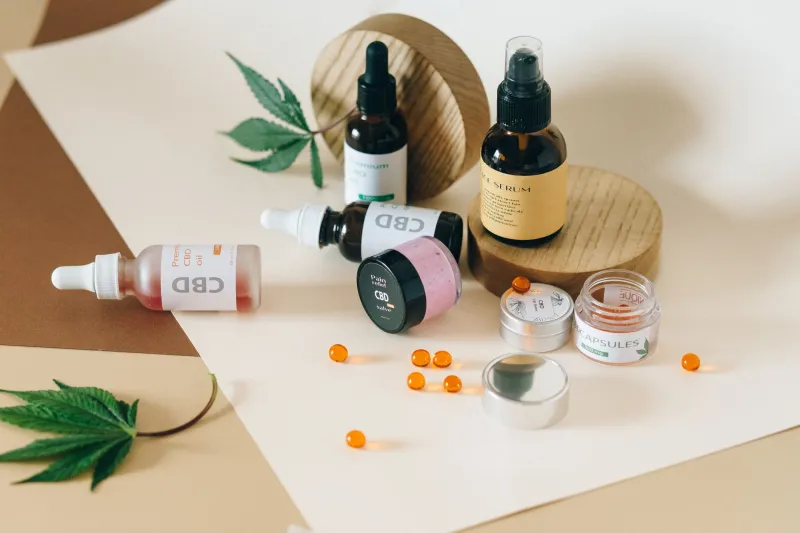
There's a particular kind of low-level panic that comes with finishing a bottle of CBD oil and realising the replacement you bought is a spray. Or a tub of capsules. Same plant, same intention, completely different ritual — and, crucially, a different way of counting what you're actually taking.
None of this needs to be dramatic. Changing format is less like switching phones and more like switching from a teabag to loose leaf: the habit shifts, the maths shifts, but the thing in your cup is still tea. Here's how to move between drops, sprays and capsules without losing track of your daily amount.
First, the bit everyone skips: what you're actually buying
CBD products in the UK come in a few broad shapes. Oils and tinctures are liquids you drop under your tongue. Sprays are the same idea, delivered as a measured mist. Capsules are swallowed and digested. Each format has its own timing, its own feel, and its own arithmetic.
The label is where the truth lives, and it's worth reading it properly before you open anything. Look for the total CBD content in milligrams (mg), the bottle size in millilitres (ml), and — for oils and sprays — the mg per ml. Then check whether the product is a full-spectrum, broad-spectrum or isolate option, since that affects what else is in there alongside the CBD. A batch number and a recent certificate of analysis (COA) from a lab are good signs. In the UK, CBD extracts sold as food supplements are expected to sit within the novel food framework, so a brand that can point to its authorisation status is showing its homework.
What you don't want is a front label shouting a big number with no context. "Strong" means nothing without a mg-per-ml figure beside it.
The mg-per-drop versus mg-per-capsule maths
This is the section to read twice.
Oils are usually sold as something like 10ml at 500mg, 1000mg or 2000mg. Take a 10ml bottle with 1000mg of CBD in it: that's 100mg per ml. A standard dropper holds roughly 1ml, and a 1ml dropper tends to deliver around 20 drops. So each drop is about 5mg. If your usual serving was four drops, you were taking roughly 20mg.
Sprays work on the same logic but with a different count. A 10ml spray bottle might be labelled as containing 200 sprays and 1000mg of CBD. That's 5mg per spray. Simple — as long as you trust yourself to count sprays rather than hold the nozzle down and hope.
Capsules skip the counting entirely. A capsule labelled 10mg contains 10mg. A 25mg capsule contains 25mg. The trade-off is that you're relying on digestion rather than the sublingual route, which many people find comes on more slowly and lasts differently. It's not better or worse — it's just a different journey through the body.
The takeaway: don't compare "drops" to "capsules" directly. Convert everything to milligrams first, then compare.
Why a slow switch beats a hard swap
If you've been taking 20mg a day as drops and you switch to 20mg capsules, you haven't changed your dose — but you have changed how your body receives it. Some people notice nothing. Others notice a subtle difference in timing, or in how long they feel it.
A gentler approach is to overlap for a few days rather than swapping overnight. Keep your old format for your main serving and use the new one for a secondary moment — say, capsules in the morning and your usual oil in the evening — until you've got a feel for it. Then flip the balance. This is also a good way to catch any digestive quirks from capsules before they become your only option on a busy Tuesday.
Keep a short note on your phone for the first week: format, mg, time, and anything you noticed. Not a wellness journal — just three lines a day. It's the quickest way to spot whether the change is suiting you.
The routine question: where does the new format fit?
Switching format often quietly breaks a routine, because the ritual was built around the old one. A dropper by the kettle doesn't translate neatly to a capsule by the kettle — you need water, and you probably don't want to dry-swallow at 7am.
So rebuild the moment deliberately. Capsules pair well with breakfast, when there's already a glass of something on the go. Sprays suit a handbag or desk drawer, because they don't leak and don't need a mirror. Oils reward a bit of patience — under the tongue, a minute or two before you get on with the day.
Pick one anchor and let the format serve it, rather than the other way round. The anchor is the habit. The format is just the delivery.
Label checks worth making before you commit
- Total mg and bottle size. Divide one by the other.
- Serving size. Some oils suggest 0.5ml, not 1ml. That changes your per-serving figure.
- Drops or sprays per bottle. If the brand doesn't say, assume it's approximate.
- Spectrum. Full, broad or isolate — know which you're moving to.
- Carrier oil or capsule filler. Some people are fussy about MCT; some aren't. Either way, it's on the label.
- Batch and COA. If it's not there, ask.
The short version
Change one thing at a time. Convert everything to milligrams before you compare. Overlap for a few days rather than swapping cold. And keep the routine — the kettle, the commute, the wind-down — steady while the format settles in.
It's a bottle swap, not a personality change. Treat it that way and the whole thing stays pleasantly unremarkable.