The Keys Are in Your Pocket: CBD, Driving and the Questions Worth Asking
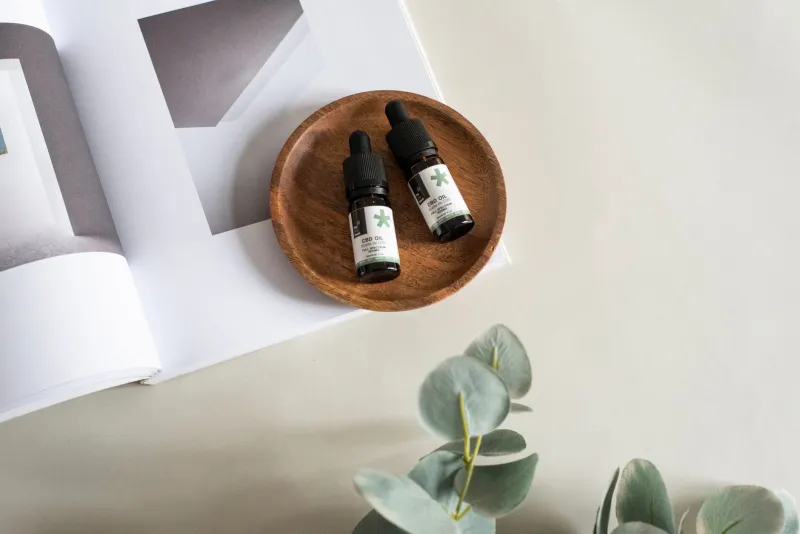
It is 7:40am. You have had your coffee, you have had your dropper, and your car keys are already in your pocket. The question is not really whether CBD is legal in the UK — it generally is, sold as a food supplement rather than a medicine. The question is narrower and more useful: is this particular bottle, at this particular dose, compatible with you driving today?
That is not a scare story. Most people using a good-quality CBD isolate at a modest dose are unlikely to run into trouble with the drug-driving limit. But ‘unlikely’ is not ‘never’, and the law does not work on vibes. So here is the calm version of what UK drivers actually need to keep in mind in 2026.
The law in one breath — then the bits that matter
In England and Wales, drug driving is covered by section 5A of the Road Traffic Act 1988. There are specified limits for certain drugs, and for THC — the main psychoactive compound in cannabis — the blood limit is 2 micrograms per litre. That threshold came in back in 2015. Scotland has its own equivalent limits, and the direction of travel is the same: if you are above the limit, you can be prosecuted whether or not you feel impaired. There is also the older offence of driving while unfit through drugs, which can apply even where a specified limit is not involved.
CBD itself is not the drug the roadside test is looking for. The police swab used at the roadside is typically screening for THC. But CBD products are not all identical. Some contain trace amounts of THC; some are made with isolate and contain none that is detectable. The law cares about what is in your blood, not what the front of the bottle says.
‘THC-free’ is a claim, not a certificate
This is where a bit of shopping discipline pays off. In the UK, CBD is regulated as a novel food, and reputable brands should be able to show you a third-party lab report — often called a certificate of analysis, or COA — for the batch you are actually holding. Look for the THC result. ‘Not detected’ is more reassuring than a vague ‘THC-free’ badge. A figure of ‘0.0%’ is worth checking too: it can mean below the lab’s detection limit, not literally zero molecules.
Product type matters as well. Isolate-based CBD is the most stripped-back option. Broad-spectrum products may contain other cannabinoids but are usually made to remove THC. Full-spectrum products can contain trace THC, and while the amount is legally small, repeated daily use is exactly the pattern where tiny amounts can add up. If you are someone who takes CBD every morning and then drives, an isolate product is the simpler starting point. It is not a guarantee, but it removes one variable.
Also read the rest of the label. Some CBD oils and capsules include other botanicals, and some people find CBD itself slightly sedating. If you feel foggy, heavy-eyed or slower than usual, that is your answer for the day — regardless of what the lab report says.
The timing question nobody can answer for you
There is no official ‘wait two hours after a dropper’ rule for CBD and driving. THC is fat-soluble, and how long it stays in your system varies with dose, frequency, body composition and individual metabolism. A one-off low-THC product is a different situation from a daily full-spectrum habit. This is why anyone who tells you a precise number of hours is guessing.
A sensible approach is to treat CBD like anything else that might affect your driving: start low, notice how you feel, and do not drive if you are in any doubt. Do not stack it with alcohol or sedating antihistamines and then assume the CBD is the only thing to think about. If you are using a prescribed medicine that contains THC — Sativex, for example — the advice is different again, and you should follow the guidance from your specialist rather than a general CBD article.
A glovebox checklist that is actually useful
- Buy from a UK retailer that publishes batch lab reports, not just a pretty website.
- Choose isolate if your priority is keeping THC risk as low as possible.
- Keep a note of what you took and when, at least for the first few weeks. It helps you spot patterns.
- If you feel drowsy, do not drive. The car keys can wait; the MOT can wait; the supermarket run can wait.
- If you are stopped by the police, be honest and calm. Arguing about the finer points of the law at the roadside helps nobody.
- Keep your receipt and batch details. They are not a legal defence, but they are useful if you ever need to check what you actually bought.
The unshowy conclusion
CBD and driving do not have to be a drama. For plenty of UK drivers, a good-quality isolate product used sensibly is unlikely to be a problem. But the responsible move is not to assume compatibility — it is to ask the questions. What is in the bottle? What does the batch report say? How do I feel? And do I actually need to drive right now?
That is not scaremongering. It is just the same calm, everyday logic we apply to a glass of wine, a late night or a new medication. The keys are in your pocket. You can leave them there for another ten minutes.